All Medicare-eligible consultations are bulk billed for patients with a valid Medicare card. Some items, including privately purchased vaccines and consumables, attract a fee.
Cryotherapy is quick and straightforward, but the healing surprises people who were not warned. Tap each one.
Four things worth knowing
The area blisters, weeps a little, crusts over and then heals. It can look considerably angrier at day three than it did before treatment. This is expected rather than a complication.
“What should it look like while it heals?”A treated spot on the face takes one to two weeks to settle. If you have a wedding, a holiday or photographs coming up, plan around it rather than hoping.
“I've got something on in a fortnight — should I wait?”If you have one sunspot you almost certainly have others, including ones you cannot see on your scalp, ears and back. Ask for a proper look while you are there — it costs nothing extra.
“Could you check the rest while I'm here?”Cryotherapy can leave a lighter patch where it was applied, and that shows more on darker skin. It usually improves over months. Your GP will discuss whether another approach suits you better.
“Will this leave a mark on my skin?”Open any of these for what it involves. Anything uncertain is examined properly first — nothing is frozen without knowing what it is.
Sunspots
What happens Those rough, scaly patches on your face, scalp, forearms and hands are actinic keratoses — sun damage that has started to change. A small proportion go on to become skin cancers, which is why they are treated.
They often feel rougher than they look, and people frequently notice them by touch while shaving or putting on moisturiser.
Freezing each one takes a few seconds. Where there are a great many across an area, a prescription cream used over several weeks treats the whole field at once, which is often the better approach.
Warts
What happens The wart is frozen, blisters, and gradually lifts away. Warts are stubborn and usually need several treatments a few weeks apart — one session rarely finishes the job.
Plantar warts on the soles of the feet are the most persistent, because the wart grows inwards under pressure. Paring the hard skin between treatments makes a real difference.
Over-the-counter salicylic acid used consistently at home alongside the freezing improves the odds considerably.
Other lesions
What happens Seborrhoeic keratoses, skin tags, molluscum and some other harmless lesions respond to freezing. Each is examined first, because the one thing that must not be frozen is a lesion nobody has identified.
Seborrhoeic keratoses are the waxy, stuck-on looking brown spots that arrive with age. They are entirely harmless and are frequently mistaken for something worse.
Where a lesion is harmless and you simply would rather not have it, that is a cosmetic treatment and Medicare does not cover it. Your GP will tell you clearly which situation applies.
Not frozen
What happens Some things must be diagnosed rather than treated blind. Freezing a melanoma destroys the evidence without treating the disease, which is why uncertain lesions are biopsied instead.
A spot that is new, changing, or unlike your others should be examined, not frozen. Book a skin check rather than asking for it to be treated.
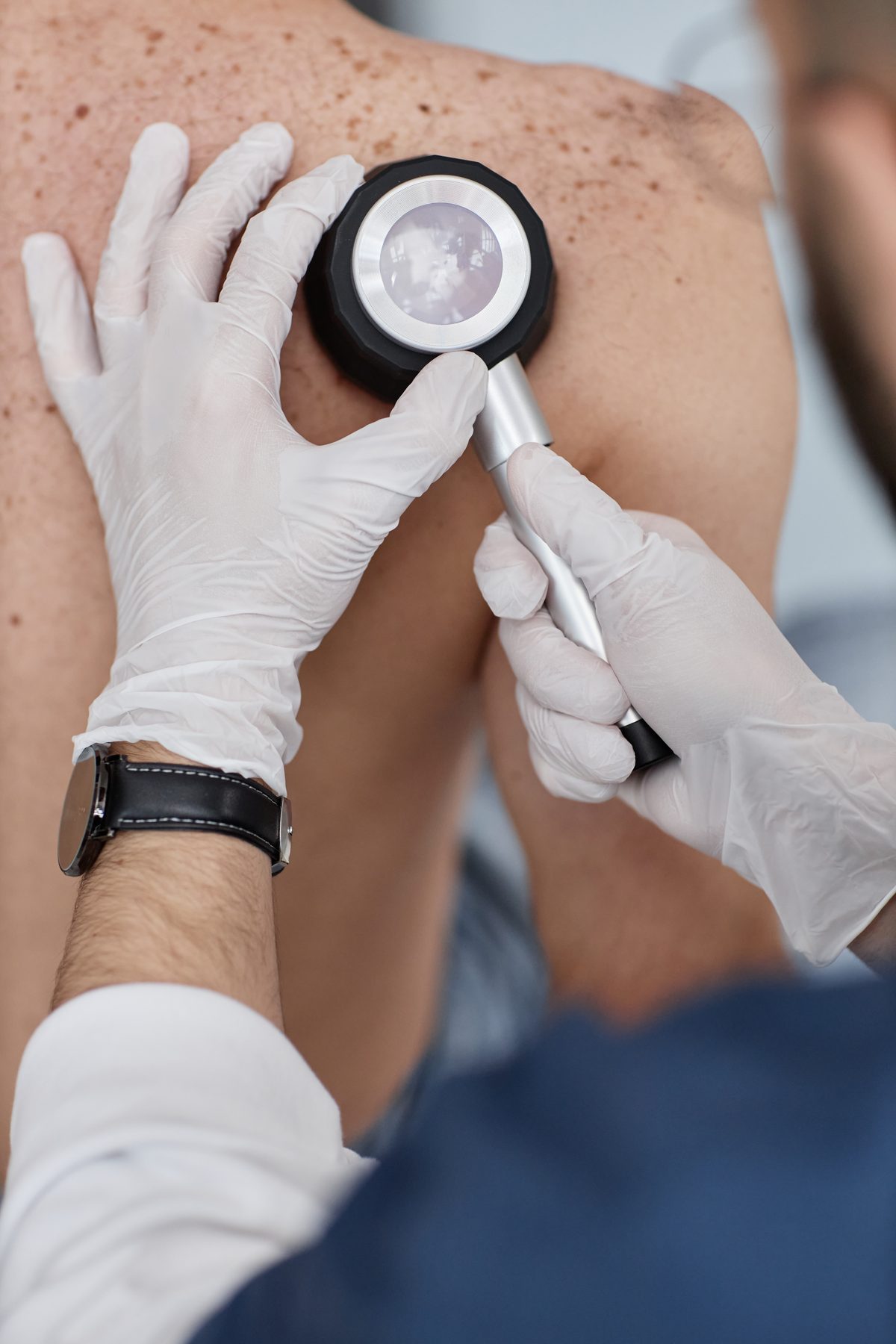
Anything new, changing, unusually coloured, or different from your other spots gets examined with a dermatoscope and biopsied if there is any doubt.
Being told a spot needs a biopsy rather than a freeze is a good outcome. It means your GP is treating the possibility seriously rather than guessing.
Nobody minds the treatment. What catches people out is the week that follows, so here it is in advance. Tap a card.
It gets worse, then better. The whole thing takes one to two weeks.
Uncommon, but worth knowing so you are not guessing.
Bulk billed for patients with a valid Medicare card on weekdays. Weekend arrangements differ — please check with reception.
The whole thing, from booking to the mark that is left. Tap any card.
Every lesion is looked at properly, usually with a dermatoscope. Nothing is frozen without knowing what it is.
Flip backLiquid nitrogen applied with a spray or a probe for a few seconds. It stings, sharply, and then stops.
Flip backSome lesions get two cycles in the same appointment — frozen, allowed to thaw, frozen again. Warts usually need repeat visits weeks apart.
Flip backStinging for a few minutes, then redness. You can drive, work and carry on with your day.
Flip backUsually within a day. Leave it alone. If it is large and in the way, ring us rather than opening it yourself.
Flip backForms over several days and falls away on its own. Picking it is how a clean result turns into a scar.
Flip backPink new skin, fading over months. It burns very easily during that time, so keep it covered or use sunscreen.
Flip backAnything that has not healed in a month, or that comes back, should be looked at again — that is worth knowing rather than accepting.
Flip backTap whatever applies and print it. Pointing at a list beats trying to describe where something is.
Cryotherapy is done during an ordinary appointment by any of our doctors. For a full skin check or anything that needs removing, ask reception who is doing skin work this week.
Our GPs hold general registration with AHPRA. Areas listed are special interests within general practice rather than recognised specialist registration. Where a lesion needs a dermatologist, or where widespread sun damage needs a different approach, your GP will explain the options and refer you.
Pick your situation and what you're coming in for. We'll show you what to expect before you book.
What are you coming in for?
Figures shown are what you pay at the clinic for the appointment itself. Medicines, devices, imaging and specialist fees are set elsewhere. Reception will always confirm the cost with you before anything goes ahead.
It stings sharply for a few seconds during the freeze and for a minute or two afterwards, a bit like a bad cold burn. No anaesthetic is needed and most people find it very manageable.
Treatment of sunspots, warts and other lesions done for a clinical reason is bulk billed on weekdays with a valid Medicare card. Purely cosmetic removal of a harmless lesion is not covered — reception will tell you before anything goes ahead.
One to two weeks for most spots. It blisters, crusts and then heals, and it genuinely looks worse before it looks better. The pink mark underneath fades over months.
Yes. Several lesions are commonly treated in a single appointment. Ask for a longer appointment if you have a lot, so nothing is rushed.
Often a slightly paler patch where it was applied, which usually improves over months but can be permanent. It shows more on darker skin, so tell your GP and they will discuss whether another approach suits you better.
Usually several, a few weeks apart, and plantar warts on the soles of the feet are the most stubborn of all. Using salicylic acid at home between visits improves the odds considerably.
Sunspots can recur in sun-damaged skin, and warts sometimes return. If a treated spot comes back, have it looked at again rather than simply re-treating it — a lesion that keeps returning needs a second opinion on what it is.
No. Leave it alone — it is a sterile dressing over healing skin. If it is large, painful or in an awkward spot, ring us rather than opening it yourself.
For warts and molluscum, sometimes, depending on the child and how they feel about it. There is usually no hurry, and many of these clear on their own, so it is a conversation rather than an automatic treatment.
Your GP will examine it first. That is not a formality — freezing something that turns out to be a melanoma destroys the evidence without treating the disease. If there is any doubt, it is biopsied instead.

If you have been rubbing the same rough patch for months, it is worth an appointment. And while you are there, ask for a look at the places you cannot see.
Liquid nitrogen freezes sunspots, warts and other small lesions in a few seconds each, and several can be treated in one appointment. Anything that needs a closer look is checked with a dermatoscope first.
The clinic is inside Salamander Bay Shopping Centre at Shop 5, 2 Town Centre Circuit, with free parking, and is a short drive from Nelson Bay, Corlette, Soldiers Point, Anna Bay, Shoal Bay, Fingal Bay and Medowie.
Book online with HotDoc at any hour, or call (02) 4008 4400.
From the health journal

