All Medicare-eligible consultations are bulk billed for patients with a valid Medicare card. Some items, including privately purchased vaccines and consumables, attract a fee.
Cosmetic work sits apart from the rest of what we do, and it is worth being clear about how. Tap each one.
Four things worth knowing
Every lesion is examined before anything is planned, because the first question is always whether it is actually harmless. Occasionally something a patient assumed was cosmetic turns out to need removing for a clinical reason — and that changes both the plan and the funding.
“I'd like it looked at properly first.”Where a lesion is harmless and the reason for removing it is how it looks, there is no Medicare item for it. You will be given a figure before anything is booked, and you are free to think about it or decide against it.
“What would it cost?”Any removal leaves a scar. Usually it is small and fades a great deal over a year, but it does not disappear, and on some parts of the body it heals less neatly than others. Your GP will tell you honestly what to expect where yours is.
“What will the scar look like?”Nobody here will encourage you towards a cosmetic procedure. If you decide not to go ahead, that is a completely reasonable outcome and nothing further is needed. If you do, you should go in knowing the cost, the recovery and the likely result.
“I'd like to think about it.”Open any of these for what it involves. If a lesion turns out to have any clinical concern attached to it, it stops being a cosmetic matter and is managed as an ordinary medical one.
Skin tags
What happens Small soft tags, usually on the neck, under the arms or around the waist, removed by snipping or freezing under local anaesthetic where needed.
Skin tags are benign. They get removed when they catch on collars, jewellery or seatbelts, or when someone simply dislikes them.
Several can usually be done in one appointment. Your GP will confirm they are tags and not something else before removing anything.
Moles
What happens A mole or raised bump that has been assessed as harmless, removed because of where it sits or how it looks. The specimen still goes to pathology.
A mole that is catching on a razor, sitting under a bra strap, or simply bothering you can be removed once your GP is satisfied there is nothing clinically concerning about it.
Everything removed goes to pathology regardless. That is not an upsell — it is how a harmless-looking lesion that turns out to be something else gets caught.
Age spots
What happens The rough, stuck-on brown patches that accumulate with age. Harmless, frequently mistaken for something worse, and removable by freezing where you would rather not have them.
These are one of the most common reasons someone comes in worried about skin cancer, and one of the most common reassuring answers. Once your GP has confirmed what it is, removal is a choice rather than a necessity.
Freezing is the usual method. It takes seconds, stings briefly, and the treated spot scabs and falls off over a couple of weeks.
Clinical
What happens If the assessment raises any concern — a changing mole, an irregular border, something that does not look right — it becomes a medical matter, and Medicare covers it.
This happens regularly, and it is the main reason the assessment comes first. A patient books wanting a mole gone for cosmetic reasons and leaves with a biopsy booked for clinical ones.
When that happens the funding changes with it. You are not charged a cosmetic fee for something that needed removing anyway.
The difference decides both what happens and what it costs, and it is decided by examination rather than by preference. Tap a card.
Where there is a medical reason to remove the lesion, it is an ordinary medical procedure.
Where the lesion is harmless and the reason for removing it is how it looks.
Where a lesion turns out to have any clinical concern attached to it, it is managed and funded as an ordinary medical procedure.
Tap any card for what that step involves.
Book an ordinary appointment and say what you would like looked at. The first visit is an assessment, not a procedure.
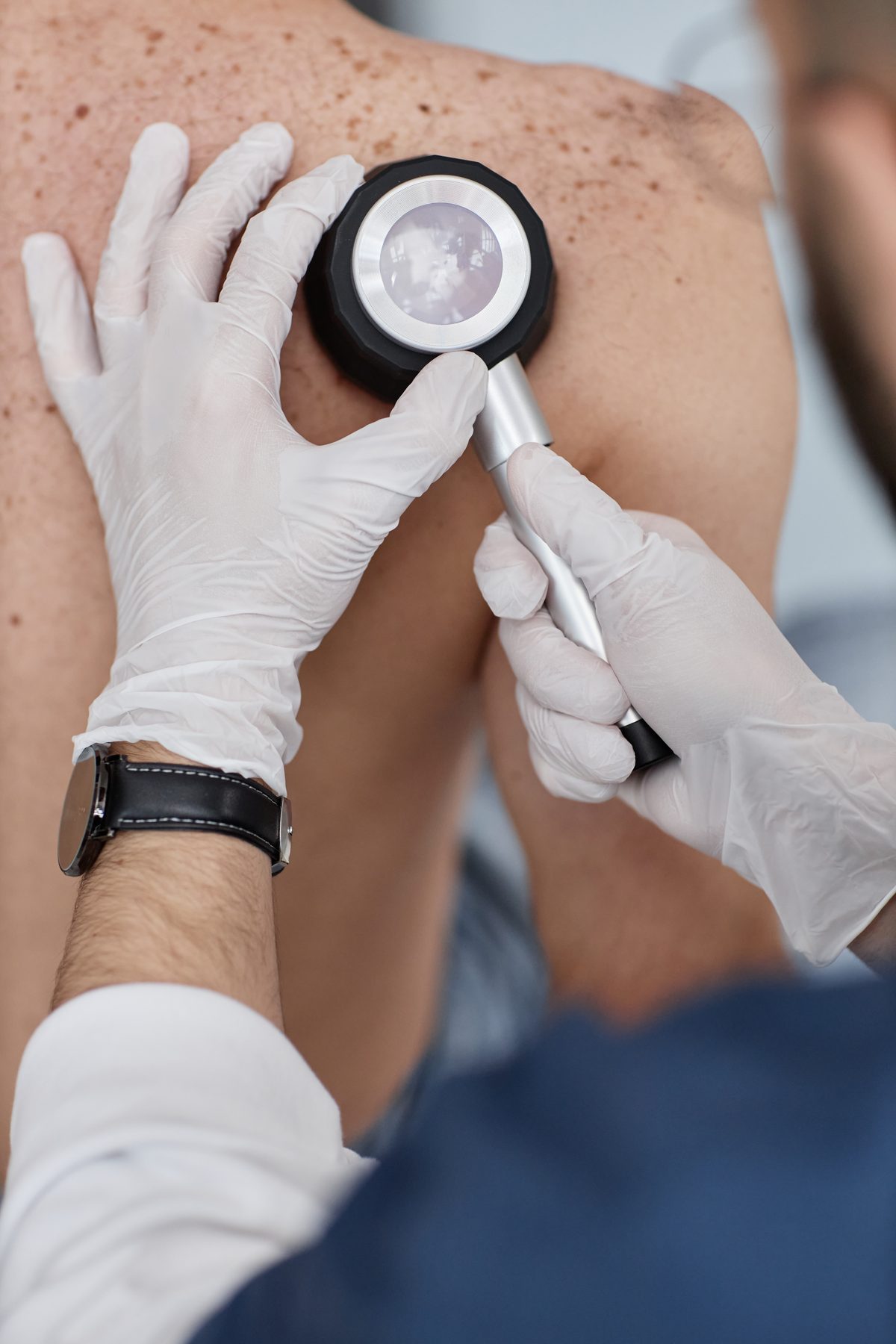
Flip backYour GP examines the lesion, often with a dermatoscope, and tells you clearly what it is and whether there is any reason to be concerned.
Flip backSometimes that answer is that it needs removing anyway, which changes both the plan and the funding. Sometimes it is that nothing needs doing at all.
Flip backIf you want it removed for cosmetic reasons, you are given a figure before anything is booked. Nothing goes ahead until you have said yes to it.
Flip backYou are welcome to leave and think. There is no clinical clock running on a cosmetic removal, and nobody will chase you about it.
Flip backBooked as a separate, longer appointment. Local anaesthetic, the removal itself, and closure where the site needs it.
Flip backEverything removed goes to the laboratory regardless of why it was removed. You are contacted with the result either way.
Flip backWound care instructions, stitches out after one to two weeks where there are any, and a review if anything is not settling as expected.
Flip backTap whatever applies and print the list to bring with you.
Several of our doctors perform minor skin procedures. Filter by who you would rather see, or ask reception who is available soonest.
Our GPs hold general registration with AHPRA. Areas listed are special interests within general practice rather than recognised specialist registration. Every one of our doctors provides this. If the GP you usually see is booked, any of the others can help — your records are shared across the practice, so nobody is starting from scratch.
Pick your situation and what you're coming in for. We'll show you what to expect before you book.
What are you coming in for?
Figures shown are what you pay at the clinic for the appointment itself. Medicines, devices, imaging and specialist fees are set elsewhere. Reception will always confirm the cost with you before anything goes ahead.
Because there is no Medicare item for removing a lesion that is harmless when the reason for removing it is how it looks. That is set by Medicare rather than by us. If there is a clinical reason to remove it, the situation changes entirely and it is bulk billed on weekdays with a valid Medicare card.
It depends on the lesion, where it is and how it needs closing. You will be given a figure at the consultation, before anything is booked, so you can decide with the number in front of you.
Yes. Removing something from the skin always leaves a mark. It is usually small and fades considerably over the first year, but it does not vanish. Your GP will tell you honestly what to expect at your particular site before you decide.
Usually not. The first visit is an assessment, and the removal is booked as a separate, longer appointment. That gives you time to think and gives us time to set the room up properly.
Yes, everything. A lesion that looks entirely harmless occasionally turns out not to be, and pathology is how that gets caught. You are contacted with the result either way.
Then it is no longer a cosmetic procedure. It is managed as an ordinary medical one, bulk billed with a valid Medicare card, with follow-up and referral as needed.
No. This is general practice — what we offer is assessment and minor surgical removal of harmless skin lesions. For injectables, laser or other cosmetic treatments, you would need a clinic that provides those services.
Some policies cover some procedures and many cover none of this. Ask your fund directly, with the figure from your quote, before you book.
Often yes, particularly with skin tags or seborrhoeic keratoses. Your GP will tell you how many is sensible in one sitting, and the quote will reflect the number.
That is completely fine, at any point before the procedure. Nothing is booked until you say so and nothing is charged for a decision not to go ahead.

Come and have it assessed. If it needs removing for a medical reason you will be told so, and if it does not, the decision is entirely yours to make without anyone pushing it.
A cosmetic consultation starts with an assessment of the spot or concern, then a written quote before anything is booked. Medicare does not cover removal for appearance alone.
The clinic is inside Salamander Bay Shopping Centre at Shop 5, 2 Town Centre Circuit, with free parking, and is a short drive from Nelson Bay, Corlette, Soldiers Point, Anna Bay, Shoal Bay, Fingal Bay and Medowie.
Book online with HotDoc at any hour, or call (02) 4008 4400.

