

Women's health
Cervical screening: you can now collect the sample yourself
The single most common reason people put off cervical screening is the examination. Since 2022, that has not been the only option — and the self-collected test is just as accurate at finding what matters.
The short version
- Cervical screening is recommended every five years for women and people with a cervix aged 25 to 74 who have ever been sexually active.
- You can collect the sample yourself, privately, in the clinic bathroom. It is not a lesser option — it is equally accurate for detecting HPV.
- The test looks for human papillomavirus, which causes almost all cervical cancer, rather than looking at cells first.
- It is bulk billed with a valid Medicare card. If you are overdue, you are not in trouble — book.
Cervical screening changed considerably in Australia in 2017, and again in 2022. If your idea of it is a two-yearly Pap smear, the current test is a different thing, and it is worth understanding why.
What the test is now looking for
The old Pap smear looked at cervical cells under a microscope for early changes. The current Cervical Screening Test looks for human papillomavirus — HPV — which is the virus that causes almost all cervical cancer.
Looking for the cause rather than the consequence is why the interval moved from two years to five. The test picks up risk considerably earlier in the process, so there is more time in hand. If HPV is found, the same sample is then examined for cell changes, and you are either brought back sooner or referred for a closer look.
Who should be screened, and when
- Every five years, from age 25 to 74.
- For anyone with a cervix who has ever been sexually active, regardless of their current relationship or sexual orientation.
- Including people who have had the HPV vaccination — the vaccine covers most but not all of the types that cause cancer.
- Including after menopause, and including if you are no longer sexually active.
If you have had a hysterectomy, whether you still need screening depends on the reason for it and on your previous results. That is a conversation to have with your GP rather than an assumption to make in either direction.
Self-collection: what it actually involves
Since July 2022, self-collection has been available to everyone eligible for screening, not just those who had declined the test previously.
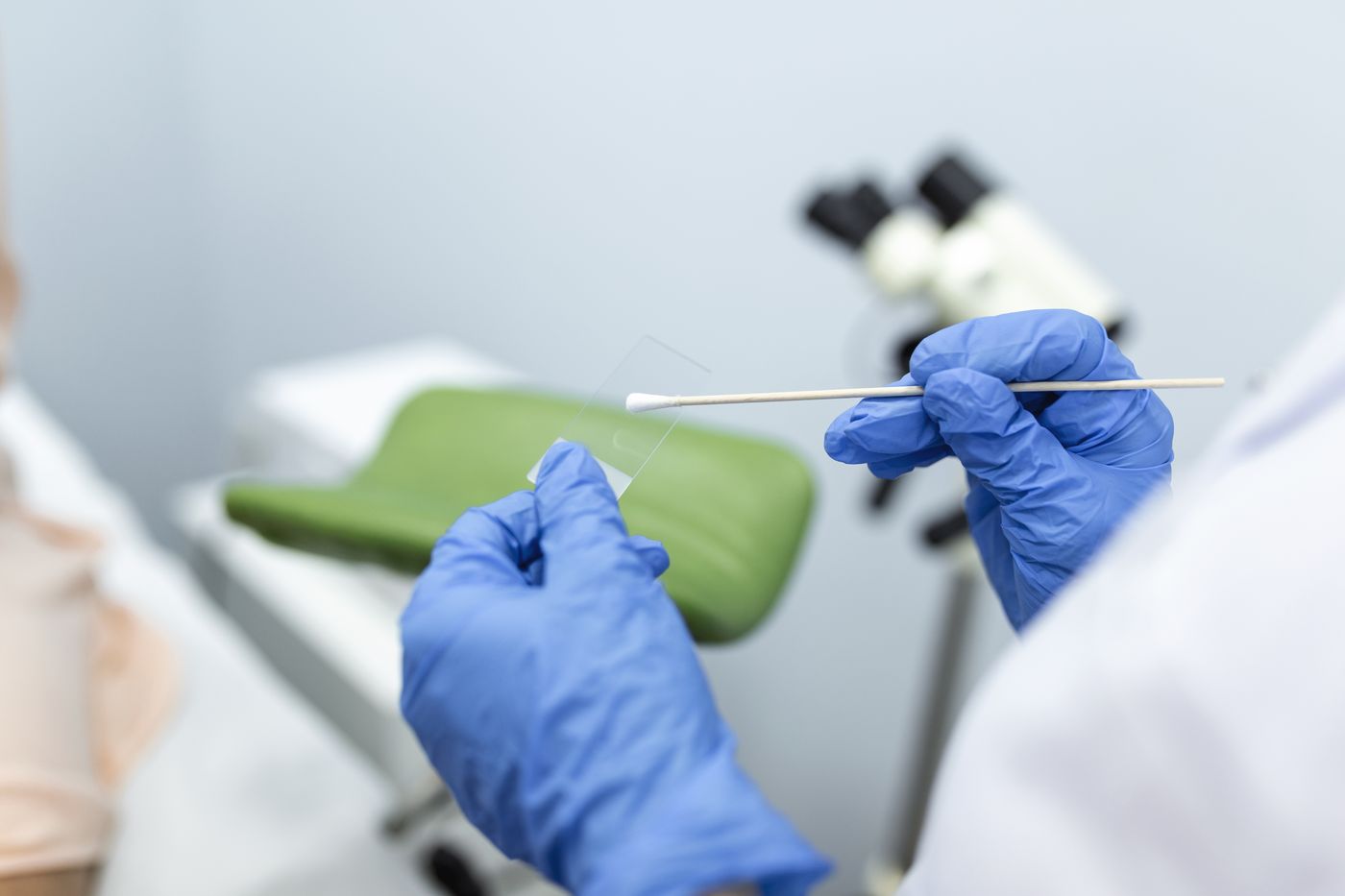
Your GP gives you a swab and explains what to do. You go to the bathroom, insert the swab a few centimetres into the vagina, rotate it for around ten to thirty seconds, and put it in the tube. That is the whole thing. No speculum, no examination, and nobody else in the room.
To be clear: this is not a compromise. For detecting HPV, a self-collected sample performs as well as one taken by a clinician. The decision between the two is genuinely yours.
One difference worth knowing. If HPV is found on a self-collected sample, you will usually need to come back for a clinician-collected sample so the cells can be examined. That is a second appointment rather than a problem, and most people never need it.
If you are overdue
A lot of people are, and the reasons are usually practical rather than deliberate — a move, a new baby, a few busy years, or simply not enjoying the test. Nobody here is going to comment on it.
The National Cancer Screening Register keeps track of when you are due and will send you a reminder, but it relies on your contact details being current. You can check your own screening history through your Medicare online account or by asking us.
What about symptoms?
Screening is for people without symptoms. It is not the test for a problem you have already noticed.
Book an appointment regardless of when your last screening was if you have unusual bleeding — between periods, after sex, or any bleeding after menopause — persistent unusual discharge, or pelvic pain that is new for you. Those need assessing in their own right, and a recent normal screening test does not rule them out.
Booking it
Say when you book that it is for cervical screening, so the right length of appointment is set aside. You can ask for a female GP, and reception will arrange it without asking why. It is bulk billed with a valid Medicare card, and it is often done alongside other things you were coming in for anyway.
This article is general information. If you are worried about a symptom, book an appointment. In an emergency, call 000.
Questions we get asked
Is self-collection as accurate as a test done by a doctor?
For detecting HPV, yes. Self-collected samples perform as well as clinician-collected ones, which is why self-collection is offered to everyone eligible rather than only to people who would otherwise decline.
I've had the HPV vaccine. Do I still need screening?
Yes. The vaccine protects against most of the HPV types that cause cervical cancer, but not all of them, so screening continues on the same five-yearly schedule.
Is cervical screening bulk billed?
Yes, on weekdays, for patients with a valid Medicare card. Weekend arrangements differ, so please check with reception when you book.
General information only. This article is general health information for people in the Port Stephens area. It is not advice about your individual situation and it does not replace a consultation with a doctor. If you are worried about a symptom, book an appointment or call us on (02) 4008 4400. In an emergency, call 000.